
Introduction
For over five decades, Sir Elton John has been the heartbeat of popular music. From the soulful melodies of “Your Song” to the high-octane energy of “Saturday Night’s Alright for Fighting,” his voice has defined generations. However, as the legendary performer officially concludes his touring career with the “Farewell Yellow Brick Road” tour, a new question has emerged in the music industry: how do we ensure that a voice this iconic never truly fades away?
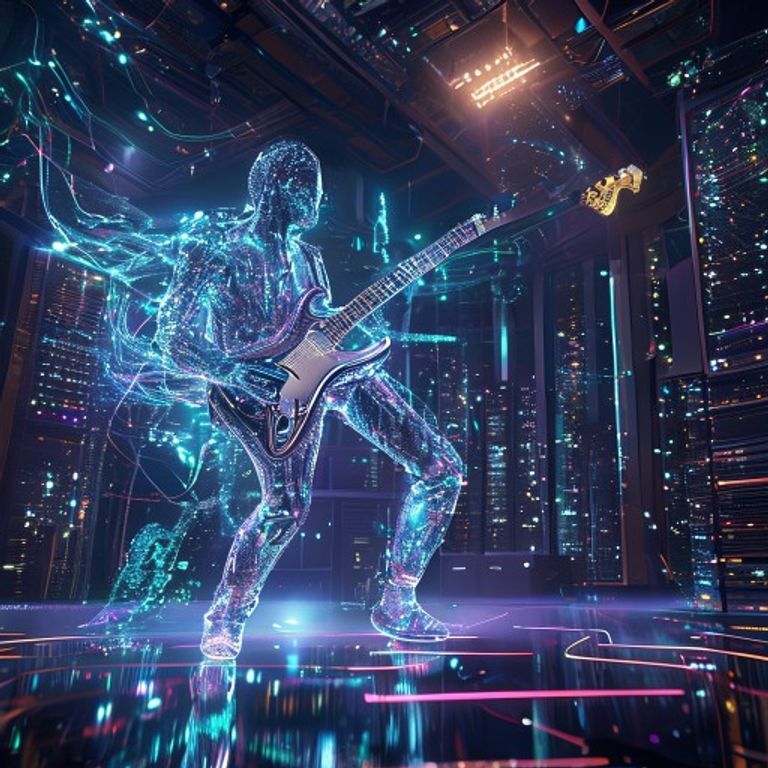
The answer lies within the rapidly evolving world of artificial intelligence. We are currently witnessing a historic shift where “digital immortality” is no longer the stuff of science fiction. By leveraging sophisticated machine learning models and high-fidelity audio data, engineers and estates are finding ways to preserve Elton John’s vocal range, timbre, and unique emotional delivery for the future. This isn’t just about playing old recordings; it’s about creating a living, breathing digital twin of one of the greatest voices in history.
As we move into this new era, the focus is shifting from simple archival to active preservation. Through the same technologies that power advanced Large Language Models (LLMs) and generative media, the music industry is building a framework where Elton John’s voice can continue to inspire, educate, and even perform in ways we are only beginning to imagine.
Why It Is Trending
The conversation surrounding Elton John and AI is trending right now because it sits at the intersection of nostalgia and high-tech innovation. Following the massive success of the “ABBA Voyage” digital residency in London, fans and industry insiders are hungry for the next evolution of legacy performances. Elton John, with his vast catalog and distinct persona, is the perfect candidate for this digital leap.
Furthermore, the technology has reached a “tipping point” in quality. Until recently, AI-generated voices often sounded metallic or lacked the “soul” of the original performer. However, with recent breakthroughs from companies like OpenAI and Google in the realm of generative audio, the nuance of a human breath or a subtle vocal crack can now be replicated with startling accuracy. This has sparked a global debate among fans and critics alike about the ethics and possibilities of posthumous or “post-retirement” digital careers.
Social media platforms like TikTok and YouTube have also fueled this trend. “AI covers” have become a viral phenomenon, showing the public exactly how capable these tools are. When fans hear a convincing “new” performance, it creates a demand for official, high-quality, and ethically managed versions of these technologies. This pressure is pushing legacy acts to proactively manage their digital likenesses before the technology moves beyond their control.
The Technology Behind the Preservation
Preserving a voice as complex as Elton John’s requires more than just a standard recording. It involves deep learning algorithms that analyze thousands of hours of studio outtakes, live performances, and interviews. By using high-performance computing power—often powered by NVIDIA’s H100 chips—developers can map the specific “vocal fingerprint” of the artist.
One of the primary tools in this process is “Voice Synthesis.” Unlike the robotic text-to-speech of the past, modern synthesis uses neural networks to understand the relationship between lyrics and emotion. This is closely related to the field of Generative AI, where the system doesn’t just copy a sound but understands how to “create” a sound in the style of the artist. If a new song were written today, an AI model trained on Elton’s 1970s vocal data could theoretically “sing” it with the same youthful vigor he possessed during the “Goodbye Yellow Brick Road” era.
Additionally, the industry is looking at Spatial Audio and VR integration. By combining a preserved AI voice with Meta’s advancements in the metaverse and virtual reality, future generations might be able to sit in a virtual rehearsal room with Sir Elton, watching him compose at the piano in real-time. This holistic approach to preservation ensures that the legacy is interactive rather than just observational.
Key Details and Insights
- Vocal Reconstruction: AI can “de-age” a voice, allowing the estate to release new material that sounds like Elton John in his 20s or 30s, preserving his peak vocal health forever.
- Ethical Frameworks: Unlike unauthorized “deepfakes,” official AI preservation projects are built with strict licensing and consent protocols to ensure the artist’s legacy is respected.
- Data Mining Legacy: Decades of multi-track studio recordings provide the “training data” necessary for Microsoft-backed AI models to learn the nuances of his piano playing and singing simultaneously.
- Interactive Experiences: Future AI models could allow for “interactive Elton” experiences in museums or digital concerts, where the AI can respond to audience prompts in Elton’s voice and style.
- Audio Restoration: AI is being used to “clean” old, low-quality recordings from the 1960s, separating the voice from background noise to create pristine new masters.
The Role of Big Tech in Music Preservation
The preservation of Elton John’s voice isn’t happening in a vacuum. It is being facilitated by the largest tech entities in the world. For instance, Google’s Lyria model is specifically designed to work with musicians to create high-fidelity AI music that maintains the artistic integrity of the original creator. These companies are providing the infrastructure that allows music labels to store and “train” these massive vocal datasets securely.
While some fear that AI will replace artists, the goal here is the opposite. It is about “augmentation” and “longevity.” By working with companies like Anthropic or OpenAI to develop ethical AI guidelines, the music industry is ensuring that Elton John’s digital twin is an extension of his art, not a replacement for it. This collaboration between Silicon Valley and Abbey Road is setting the standard for how all cultural icons will be remembered in the digital age.
Addressing the Challenges
Despite the excitement, the path to digital immortality isn’t without hurdles. One major concern is the “Uncanny Valley” effect, where a digital recreation looks or sounds almost human but is slightly “off,” causing a sense of unease in the listener. Achieving 100% emotional authenticity is the final frontier for AI developers. Music is, after all, a deeply human expression of pain, joy, and experience.
There is also the matter of copyright. As Generative AI becomes more accessible, the legal system is struggling to keep up. Who owns the “rights” to a voice? If an AI writes a song in the style of Elton John, does the royalty go to the programmers, the estate, or the AI company? These are the questions that will define the next decade of entertainment law.
Final Thoughts
Sir Elton John has always been a pioneer, from his flamboyant fashion to his early adoption of stadium-rock production. It is only fitting that he is now at the forefront of the AI revolution. By preserving his voice through advanced machine learning and digital modeling, we are ensuring that his “Song” never ends. The technology serves as a bridge between the physical limitations of the human body and the infinite possibilities of the digital realm.
As we look forward, the preservation of Elton John’s voice will likely serve as the blueprint for other legends. We are entering an era where our favorite artists will never truly leave us; they will simply transition into a new form of existence. While nothing can replace the magic of seeing the real Rocketman live on stage, AI offers us a way to keep that spark alive for the next hundred years and beyond.
Frequently Asked Questions
Is the AI voice of Elton John used for new songs?
Currently, AI is primarily used for restoration and archival purposes. While the technology exists to create new songs, Elton John’s estate and the artist himself prioritize using AI to enhance historical recordings and ensure his vocal legacy remains high-quality for future digital experiences.
Can AI perfectly replicate the emotion in a singer’s voice?
While AI has made massive leaps in mimicking timbre and tone, capturing “soul” and “emotion” remains a challenge. However, by using “performance-to-performance” synthesis, where a human singer provides the emotional blueprint and the AI overlays Elton’s vocal texture, the results are becoming indistinguishably human.
Is AI preservation legal and ethical?
When done with the consent of the artist and their estate, AI preservation is legal and considered an extension of their intellectual property. The industry is currently working on strict “Digital Portrait” laws to prevent unauthorized deepfakes while allowing for official, ethical digital legacies.