
The Silicon Threat to Global Stability: Medvedev’s Warning
When the Deputy Chairman of the Russian Security Council and former President Dmitry Medvedev speaks on the intersection of technology and warfare, the international community usually braces for a stern rhetoric. However, his latest warnings regarding the integration of Artificial Intelligence into global security frameworks have struck a chord that resonates far beyond Moscow. Medvedev’s recent assertions suggest that we are entering a “pre-critical” phase where the lack of international consensus on AI regulation could lead to irreversible military escalations. It is no longer just a debate for Silicon Valley boardrooms; it is now a core pillar of nuclear and conventional deterrence strategies.
The core of the concern lies in the delegation of decision-making. As neural networks become faster and more complex, the window for human intervention in high-stakes military scenarios is shrinking. Medvedev’s commentary highlights a fear shared by many global leaders: that an algorithm, devoid of human intuition or moral restraint, could misinterpret a signal and initiate a kinetic response. In a world where minutes define the difference between a false alarm and a retaliatory strike, the “black box” nature of advanced AI models presents an unprecedented risk to global peace.
Why It Is Trending
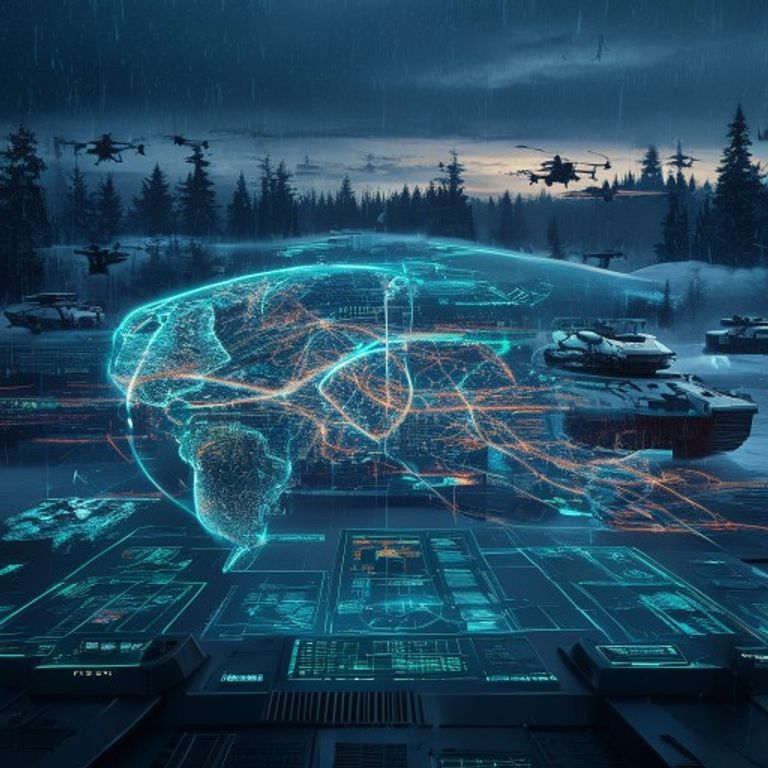
The reason this story is dominating news cycles is the sheer speed at which the “AI Arms Race” is moving. Unlike previous technological shifts, such as the development of radar or even nuclear energy, AI is evolving at an exponential rate. Current headlines are buzzing because we are seeing a convergence of geopolitical friction and rapid technological breakthroughs. When a high-ranking official from a major nuclear power warns of AI-induced catastrophe, it validates the warnings previously issued by tech luminaries and ethics researchers.
Furthermore, the topic is trending because of the recent advancements by companies like OpenAI and Google. As these organizations push the boundaries of what Large Language Models (LLMs) can do, the military applications of these technologies become more apparent. The public is increasingly aware that the same technology used to write emails or generate art could, if repurposed, manage drone swarms or coordinate cyber-attacks on critical infrastructure. This crossover between consumer tech and national security has made Medvedev’s warnings a focal point for policy analysts and the general public alike.
Finally, the discussion is gaining traction due to the upcoming international summits focused on AI safety. With the Bletchley Declaration and subsequent global forums, nations are scrambling to create a “digital Geneva Convention.” Medvedev’s remarks act as a cold reminder that without the participation of all major powers—including those currently at odds with the West—any global agreement on AI security remains fundamentally incomplete.
The Erosion of Human Oversight
One of the most chilling aspects of Medvedev’s warning is the potential loss of “meaningful human control.” In professional military terms, this refers to the necessity of having a human being in the loop for decisions involving lethal force. However, as NVIDIA continues to produce hardware that allows for near-instantaneous processing of battlefield data, the temptation to automate the response process grows. The risk isn’t just a “Skynet” scenario of a self-aware machine, but rather a sophisticated system making a logical error based on flawed data input.
This brings us to a related and equally pressing issue: AI-Driven Disinformation and Deepfakes. Before a single missile is fired, AI can be used to destabilize a nation from within. By creating perfectly fabricated videos or audio of world leaders, hostile actors can trigger panic or provoke a military response. Medvedev’s concerns extend to the digital battlefield, where the line between truth and fabrication is being blurred by generative models. This erosion of trust makes diplomatic de-escalation nearly impossible during a crisis.
Moreover, the pursuit of Artificial General Intelligence (AGI) adds another layer of complexity. If a system reaches a level of cognitive ability that surpasses human understanding, the safety protocols currently being developed by firms like Anthropic or Microsoft might prove insufficient. Medvedev’s rhetoric suggests that the geopolitical landscape is not prepared for a technology that can out-think its creators, especially when that technology is integrated into the command-and-control structures of sovereign states.
Key Details and Insights
- The Speed of Decision-Making: AI can process information and execute commands in milliseconds, far outstripping the human ability to verify the accuracy of that information in a crisis.
- Nuclear Integration: There is a growing concern that AI could be integrated into early-warning systems, increasing the risk of an automated nuclear escalation.
- The Regulation Gap: While companies like Meta advocate for open-source AI, others argue that high-level military AI must be tightly controlled and regulated through international treaties.
- Sovereignty vs. Safety: Medvedev emphasized that no nation will willingly fall behind in the AI race, creating a “security dilemma” where every advancement by one side forces a riskier advancement by the other.
- Economic Warfare: Beyond the physical battlefield, AI-driven algorithms could be used to collapse financial markets or sabotage power grids, leading to domestic instability.
The Role of Big Tech in Global Security
It is impossible to discuss these risks without mentioning the role of major technology providers. Infrastructure built by Microsoft and Google provides the backbone for much of the world’s digital defense. These companies are now in a precarious position: they are private entities, yet their products are essential to national security. The ethical frameworks they implement today will likely become the foundation for military AI standards tomorrow.
Medvedev’s warnings serve as a catalyst for these companies to be more transparent about their safety “red lines.” For instance, OpenAI has frequently discussed the importance of alignment—ensuring that AI goals match human values. However, in a military context, “values” differ greatly between nations. What Russia considers a defensive necessity, the US might see as a provocative escalation. This ideological divide is the primary obstacle to creating a unified safety standard for global AI.
Final Thoughts
The warnings issued by Dmitry Medvedev regarding AI and global security are a stark reminder that we are at a crossroads. The integration of autonomous systems into the fabric of national defense is not a distant future—it is a current reality. While some of the rhetoric may be fueled by the current geopolitical climate, the underlying technical risks are undeniable. The challenge for the next decade will be to foster a level of international cooperation that matches the speed of technological innovation.
We must move beyond the “winner takes all” mentality of the current AI race. If the world’s superpowers cannot agree on the basic rules of engagement for AI, we risk a future where a line of code determines the fate of billions. Security is no longer just about the size of an arsenal; it is about the reliability of the algorithms that manage it. As we move forward, the dialogue between tech giants, ethicists, and government leaders must become more robust, transparent, and, most importantly, global.
Frequently Asked Questions (FAQ)
What is the main risk of AI in global security?
The primary risk is the loss of human oversight in military decision-making. AI systems could potentially initiate or escalate conflicts faster than humans can intervene, or they could make catastrophic errors based on misinterpreted data or “hallucinations.”
How are companies like OpenAI and Google involved in this?
While these companies primarily focus on civilian applications, the underlying technology (LLMs and neural networks) they develop can be adapted for military use. They are also leaders in establishing AI safety protocols that governments look to when drafting new regulations.
Can AI be used to prevent wars?
In theory, yes. AI can be used for better predictive modeling, monitoring treaty compliance, and enhancing diplomatic communication. However, the current trend is focused more on competitive military advantages, which tends to increase rather than decrease global tension.