
The Digital Encore: How AI is Bringing Rock Legends Back to the Stage
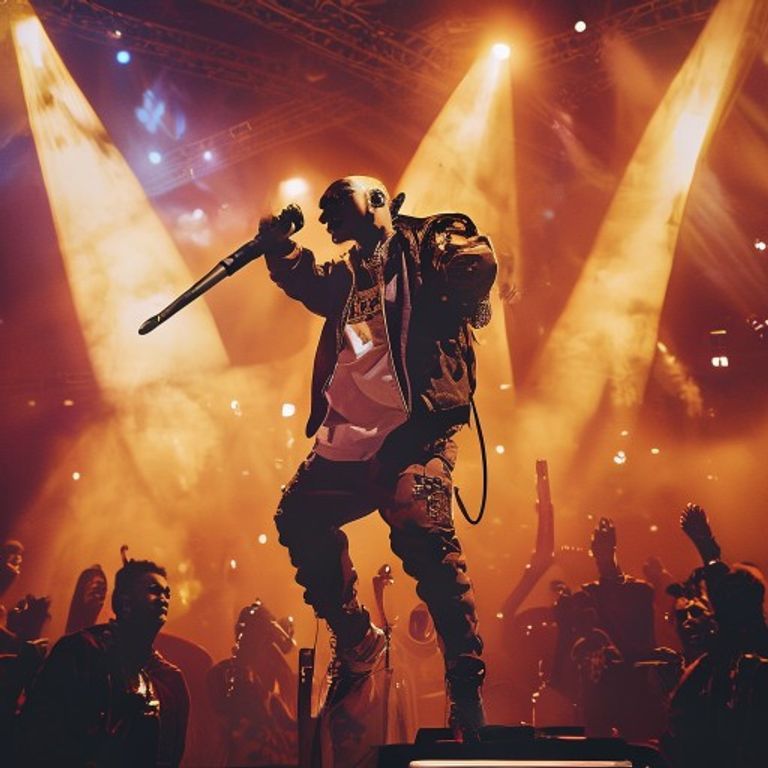
The lights dim, the feedback from a Gibson Les Paul hums through the stadium speakers, and a familiar silhouette steps into the spotlight. For a moment, the crowd forgets that the legendary frontman center-stage has been gone for over forty years. This isn’t a tribute act or a grainy projection from the 1970s; it is a high-fidelity, AI-driven restoration that is currently upending the music industry. The era of the “final tour” is being redefined as technology allows the icons of the past to perform for the audiences of the future.
From the Beatles releasing their “final” song to KISS announcing a permanent transition into digital avatars, the boundary between biological life and digital legacy is blurring. We are no longer just listening to old records; we are witnessing the birth of the “immortal artist.” This movement is fueled by massive leaps in machine learning and neural networks, turning archival fragments into stadium-sized spectacles.
While some fans remain skeptical of the “uncanny valley,” the commercial and emotional impact of these projects is undeniable. As we move deeper into the 2020s, the question is no longer *if* we can bring back the dead, but *how* we should manage their digital afterlives in a world where data never dies.
Why It Is Trending Right Now
The sudden surge in AI-powered musical resurrections is not a coincidence. It is the result of a perfect storm where nostalgia-driven markets meet breakthroughs in generative technology. Recently, the success of the ABBA Voyage show in London proved that audiences are willing to pay top dollar for a digital experience if the quality is high enough. This success has sent shockwaves through the estates of classic rock legends, who now see a way to keep their legacies—and revenue streams—alive indefinitely.
Furthermore, the release of the Beatles’ track “Now and Then” in late 2023 acted as a proof-of-concept for the entire industry. By using “source separation” technology developed by Peter Jackson’s team, they were able to extract John Lennon’s voice from a low-quality cassette tape with stunning clarity. This wouldn’t have been possible without the computational power provided by companies like NVIDIA, whose specialized hardware allows for the complex processing required to isolate audio frequencies that were previously inseparable.
Social media platforms like TikTok and Instagram have also played a role. Younger generations are discovering “new” content from heritage acts, creating a demand for high-definition visuals and clean audio that matches modern production standards. When a 50-year-old song sounds like it was recorded yesterday, it bridges the generational gap, making AI the ultimate tool for musical preservation.
The Tech Behind the Talent: From OpenAI to NVIDIA
Resurrecting a rock star requires more than just a filter. It involves deep learning models that can analyze thousands of hours of vocal takes, interviews, and live performances to capture the unique “soul” of a singer’s delivery. This is where Google’s research into audio synthesis and Microsoft’s investments in massive cloud computing play a pivotal role. These platforms provide the infrastructure needed to train models that don’t just mimic a voice, but understand the nuance of a vibrato or a gravelly growl.
In addition to audio, the visual aspect is moving toward hyper-realism. Meta’s advancements in digital twin technology and motion capture are being adapted to create avatars that move with the specific mannerisms of a young Elvis Presley or a peak-era Freddie Mercury. These aren’t static holograms; they are dynamic digital entities capable of “reacting” to a live crowd’s energy through pre-programmed triggers and real-time rendering.
Interestingly, this trend is also intersecting with AI-driven video synthesis. Much like the tools being developed by OpenAI (such as Sora), the music industry is looking at ways to generate entire music videos or concert backdrops from text prompts, allowing estates to create “new” visual content for songs written half a century ago. This synergy between audio and visual AI is what makes the current era of resurrection so potent.
Key Details of the AI Music Revolution
- Audio Isolation: AI can now “clean” old home movies and demos, separating a vocal from a piano or background noise, allowing for modern studio layering.
- Generative Songwriting: While controversial, some projects use AI to suggest melodies or lyrics in the style of deceased songwriters to finish incomplete works.
- Digital Avatars: Groups like KISS have partnered with Pophouse Entertainment to create “superhero” versions of themselves that can tour multiple cities simultaneously.
- Vocal Synthesis: Using RVC (Retrieval-based Voice Conversion) technology, producers can map a legend’s voice onto a new singer’s performance to create “lost” tracks.
- Ethical Guardrails: The industry is currently debating the ELVIS Act and other legislation to protect the “voice and likeness” of artists from unauthorized AI cloning.
The Ethical Tightrope: Preservation or Exploitation?
As we embrace the technical marvel of hearing a “new” Jimi Hendrix solo, a significant ethical debate looms. Critics argue that resurrecting artists removes the finality of death, potentially devaluing the work they did while alive. There is a fine line between a tribute and a “digital puppet.” If an artist didn’t give consent for their likeness to be used posthumously, does the estate have the moral right to grant it?
Moreover, there is the issue of AI copyright. Who owns a song that was written by a human but “finished” by an algorithm? Current laws in many jurisdictions are struggling to keep up. If a Google-trained AI produces a melody in the style of David Bowie, does the royalty go to the Bowie estate, the programmers, or the owners of the training data? These are the questions that will define the next decade of entertainment law.
Despite these concerns, many family members of deceased stars see AI as a gift. It allows them to share the magic of their loved ones with a world that never got to see them live. For them, it is a form of digital preservation, ensuring that the flame of classic rock never truly flickers out.
Engaging the Next Generation
The ultimate goal for many of these AI projects is longevity. Classic rock has long been the backbone of the music economy, but as the original performers retire or pass away, the industry needs a way to keep the catalog “active.” AI allows these brands to remain “touring entities.”
Imagine a festival where the lineup includes a 1974-era Led Zeppelin followed by a modern-day Dua Lipa. This isn’t science fiction; it’s a business model. By leveraging NVIDIA‘s real-time ray tracing and Meta‘s immersive VR environments, fans can now experience a 1969 Woodstock set from the comfort of their living rooms or in a specially built high-tech arena.
Final Thoughts
The resurrection of classic rock legends through AI is more than just a gimmick; it is a fundamental shift in how we consume culture. We are moving toward a “post-human” era of entertainment where the physical presence of an artist is no longer a requirement for a live performance. While the technology is still perfecting its “human touch,” the progress made in just the last twenty-four months is staggering.
As long as there is a demand for the timeless sounds of the 60s, 70s, and 80s, technology will find a way to supply it. Whether we view these AI iterations as soulful tributes or silicon shadows, one thing is certain: the legends of rock and roll are no longer bound by the constraints of time. The show, it seems, will truly go on forever.
Frequently Asked Questions
Is the voice in the “new” Beatles song actually John Lennon?
Yes. Unlike “deepfake” voices, the Beatles used AI to isolate Lennon’s actual voice from an old cassette tape. The AI didn’t *create* the voice; it simply cleaned it and separated it from the background noise so it could be used in a high-quality studio recording.
Will digital avatars replace live musicians?
While digital avatars are becoming popular for heritage acts, they are unlikely to replace the raw energy of live, human musicians. Instead, they offer a different kind of experience—a “theatrical spectacle” that allows fans to see legends who are no longer able to perform.
Are these AI performances legal?
Currently, these projects are legal as long as the artist’s estate grants permission. However, new laws are being drafted globally to protect artists from unauthorized AI cloning, ensuring that their digital likeness cannot be used without explicit consent and compensation.