
Introduction
There was a time when waiting five to seven business days for a package was the gold standard of convenience. Then came the two-day revolution, led by e-commerce giants, which fundamentally shifted our expectations of digital retail. Today, even forty-eight hours feels like an eternity for a generation of consumers accustomed to instant gratification. We are currently witnessing the birth of the “Ultra-Fast” era—a landscape where your groceries, electronics, and daily essentials arrive at your doorstep in under 30 minutes.
This seismic shift in logistics isn’t just about faster vans or more delivery drivers; it is a sophisticated ballet choreographed by artificial intelligence. From predicting what you will buy before you even click “order” to navigating complex urban labyrinths using autonomous drones, AI is the invisible engine driving this retail transformation. The dream of near-instant delivery is finally becoming a scalable reality, and it is permanently altering the DNA of global commerce.
Why It Is Trending
The rise of 30-minute delivery, often categorized under “Quick Commerce” or Q-commerce, is trending because it addresses the “Last Mile” problem—historically the most expensive and inefficient part of the supply chain. In a post-pandemic world, consumer behavior has solidified around a hybrid shopping model. People want the variety of the internet with the immediacy of a physical storefront. AI has finally reached a level of maturity where it can bridge this gap profitably.
Furthermore, major technological milestones from companies like NVIDIA and Amazon have pushed autonomous navigation into the mainstream. With the integration of advanced Computer Vision, delivery robots and drones can now perceive their environments with human-like precision, making the 30-minute window a feasible target rather than a marketing gimmick. Investors and tech enthusiasts are hyper-focused on this space because whoever masters the 30-minute window effectively controls the future of high-frequency retail.
The Brains Behind the Speed: How AI Makes It Possible
To achieve such blistering speeds, companies have moved away from traditional warehouse models toward decentralized “Dark Stores.” These are small, local fulfillment centers located in the heart of residential areas. However, managing inventory across thousands of tiny hubs is a mathematical nightmare for humans. This is where Predictive Analytics—a core branch of modern AI—comes into play.
Using algorithms that analyze historical data, weather patterns, local events, and even social media trends, AI can predict local demand with startling accuracy. If a heatwave is forecast for a specific neighborhood, the AI ensures that local dark stores are pre-stocked with extra fans and cold beverages before the orders even roll in. This proactive approach eliminates the transit time from central warehouses, allowing the “30-minute clock” to start with the items already just blocks away from the customer.
The Role of Computer Vision in Autonomous Transit
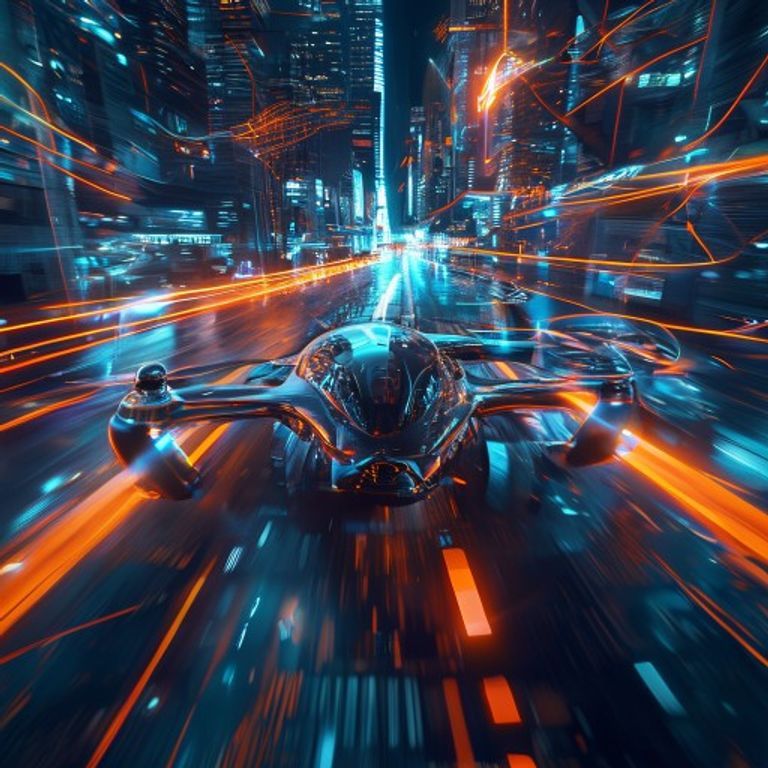
Once an order is picked—often by AI-augmented robots—the delivery phase begins. This is where Computer Vision plays a critical role. Whether it is a sidewalk-roving bot or a hexacopter drone, these machines use AI to “see” and interpret the world. By processing millions of data points per second, these systems can distinguish between a stationary mailbox and a moving toddler, ensuring safety while maintaining speed.
Companies like Google (through its Wing drone project) and Meta (investing in spatial mapping) are contributing to the infrastructure that allows these machines to navigate without human intervention. This reduces the reliance on gig-economy drivers, who are often slowed down by traffic congestion and parking difficulties, further slashing delivery times.
Key Details of the AI Delivery Revolution
- Dynamic Route Optimization: AI platforms like those supported by Microsoft Azure analyze real-time traffic, road construction, and even elevator wait times to provide delivery personnel with the most efficient path possible.
- Hyper-Local Inventory Management: AI determines exactly what needs to be in which “micro-fulfillment center” to minimize stockouts and overstocking.
- Automated Picking and Packing: Warehouse robots use machine learning to identify and grab items of different shapes and textures without damaging them, cutting the “click-to-ship” time to under three minutes.
- Sustainably-Minded Logistics: By optimizing routes and using electric autonomous vehicles, AI reduces the carbon footprint associated with multiple small-batch deliveries.
- Predictive Customer Support: AI bots can now anticipate delivery delays before they happen, automatically re-routing a new package or offering compensation to the user without human intervention.
The Economic Impact on Small Businesses
While large corporations are leading the charge, the democratizing power of AI is also reaching smaller retailers. Third-party logistics platforms are now offering AI-as-a-Service, allowing local boutiques and independent grocers to tap into ultra-fast delivery networks. This creates a more level playing field where the “neighborhood shop” can compete with global behemoths on the grounds of both service and speed.
However, this shift also demands a digital transformation for small owners. To participate in a 30-minute ecosystem, inventory must be digitized and synced in real-time. This push toward total digitization is another reason why AI infrastructure is seeing record-breaking adoption rates across the retail sector.
Challenges and Ethical Considerations
Despite the excitement, the path to 30-minute ubiquity isn’t without hurdles. Regulatory bodies are still catching up with drone laws and sidewalk robot permissions. There is also the significant question of labor. As AI-driven automation takes over the heavy lifting of sorting and transporting, the role of the human worker is shifting toward oversight and maintenance. Ensuring a “human-in-the-loop” approach is essential for handling edge cases that AI might not yet understand.
Data privacy is another concern. For predictive analytics to work, AI needs access to consumer habits. Companies must balance the convenience of “anticipatory shipping” with the ethical responsibility of protecting user data and maintaining transparency about how these predictions are made.
Final Thoughts
The transition to 30-minute deliveries represents a fundamental change in our relationship with physical goods. We are moving toward a world where the “store” is no longer a destination we visit, but a service that surrounds us. Driven by the incredible processing power of NVIDIA hardware and the algorithmic sophistication of platforms like OpenAI and Google, AI has turned a logistical pipe dream into a daily utility.
As these systems become more refined, we can expect the 30-minute window to become the standard for almost everything we consume. The convergence of Computer Vision, autonomous robotics, and deep learning is not just making us faster—it’s making the global supply chain smarter, more resilient, and ultimately more human-centric by giving us back our most valuable resource: time.
Frequently Asked Questions
How does AI know what I want before I buy it?
AI uses predictive analytics to look at your past purchase history, items you have viewed, and broader trends in your local area. By identifying patterns, the system can ensure that high-probability items are moved to a local fulfillment center near you before you even place the order.
Are autonomous delivery robots safe for pedestrians?
Yes, these robots use advanced Computer Vision and LIDAR technology to map their surroundings in 360 degrees. They are programmed to prioritize the safety of living beings and can stop instantly or navigate around obstacles much faster than a human driver could react.
Does 30-minute delivery cost more for the consumer?
Initially, ultra-fast delivery often came with a premium fee. However, as AI optimizes routes and reduces the need for expensive manual labor in sorting and transit, the operational costs are dropping. Many companies now offer this speed as part of a standard subscription or for a very nominal fee.