
The Shift Toward a Software-Defined Era
The automotive landscape is currently caught in a high-stakes tug-of-war between legacy manufacturing caution and the audacity of silicon-valley-style innovation. While some traditional automakers are scaling back their electric vehicle (EV) ambitions in the face of cooling demand, Rivian is doing the exact opposite. By doubling down on a vertically integrated strategy, the Irvine-based company is signaling that the future of transportation isn’t just about moving parts—it’s about the code that governs them.
Rivian’s recent trajectory suggests a fundamental pivot from being just another “EV startup” to becoming a foundational platform for the next generation of mobility. This isn’t merely about putting more R1S SUVs on the road; it is about a radical redesign of vehicle architecture that reduces complexity while dramatically increasing capability. As the industry watches closely, Rivian is attempting to prove that a focused, software-first approach can overcome the brutal capital requirements of the automotive sector.
In this high-velocity environment, Rivian is positioning its brand as the premium, adventurous alternative to Tesla, while simultaneously building the “operating system” for the modern truck and SUV. This strategy involves a blend of hardware prowess and sophisticated digital integration that feels more like a smartphone launch than a traditional car debut.
Why It Is Trending
Rivian is currently dominating the tech and automotive news cycle for several critical reasons, most notably its landmark joint venture with the Volkswagen Group. This $5 billion deal is a seismic shift in the industry, validating Rivian’s internal technology stack while providing a much-needed capital infusion to bring the more affordable R2 and R3 models to market. Investors and enthusiasts alike are viewing this as a “stamp of approval” from one of the world’s largest legacy manufacturers.
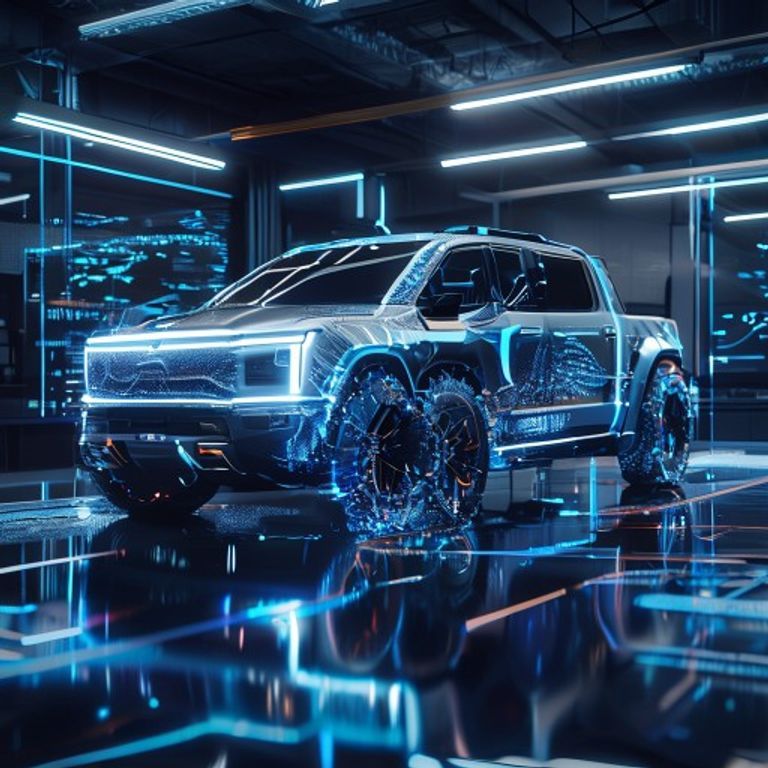
Furthermore, the buzz is intensified by Rivian’s mastery of the “Software-Defined Vehicle” (SDV). By reducing the number of electronic control units (ECUs) and moving toward a “zonal architecture,” Rivian has significantly lowered production costs and simplified the manufacturing process. This technical efficiency is a hot topic among engineers and analysts who believe this is the only way for EV makers to reach profitability in a competitive global market.
The cultural footprint of the brand is also expanding. With the R2 and the retro-styled R3 platform garnering viral attention on social media, Rivian has successfully captured the “adventure” niche. This trend isn’t just about utility; it’s about a lifestyle choice that resonates with a demographic looking for sustainable luxury without the clinical feel of some competitors.
The Convergence of AI and Autonomy
One cannot discuss the future of Rivian without addressing the massive influence of Artificial Intelligence on the driving experience. Rivian is heavily leveraging high-performance compute platforms, much like those powered by NVIDIA, to process real-time sensor data. This focus on “AI-at-the-edge” allows the vehicle to not only perceive its surroundings for safety but also to learn and adapt to driver preferences over time.
As Rivian refines its driver-assistance systems, there is an increasing intersection with generative AI technologies. Much like OpenAI and Anthropic are revolutionizing how we interact with text and code, Rivian is exploring how large language models (LLMs) can create a more intuitive, voice-first cabin experience. The goal is to move away from clunky menus and toward a natural dialogue between the driver and the vehicle, where the car understands context, intent, and complex commands without the need for manual input.
Key Details of the Strategy
- Zonal Architecture: Rivian has consolidated dozens of separate computers into just a few powerful “zones.” This reduces miles of wiring, saves weight, and allows for seamless over-the-air (OTA) updates that can improve the vehicle’s performance overnight.
- The Volkswagen Partnership: This strategic alliance provides Rivian with the cash flow to scale production at its Georgia plant while allowing VW to utilize Rivian’s advanced software and electrical architecture for its future global fleet.
- Vertical Integration: From the battery packs to the drive units and the infotainment software, Rivian builds almost everything in-house. This gives them total control over the user experience and the ability to iterate faster than legacy brands.
- The R2 and R3 Platforms: These upcoming models represent Rivian’s move into the mass market. The R2 is designed to compete directly with the Tesla Model Y, offering a more rugged, outdoor-focused alternative at a $45,000 price point.
- Fleet and Commercial Growth: Beyond consumer vehicles, Rivian’s electric delivery vans (EDVs) continue to be a cornerstone of their business, with massive contracts from Amazon helping to stabilize their revenue stream.
The Competitive Landscape
The road ahead is not without obstacles. Rivian faces stiff competition not only from Tesla but also from Chinese giants like BYD and legacy powerhouses like Ford and GM, who are pouring billions into their own EV divisions. However, Rivian’s advantage lies in its lack of “technical debt.” Because they started from a clean sheet of paper, they aren’t trying to patch old software onto old hardware.
This agility allows them to implement advanced features—like sophisticated thermal management and predictive maintenance—much faster than their rivals. By using advanced data analytics, Rivian can identify a potential mechanical issue before the driver even notices a symptom, often fixing it via a software patch or scheduling a mobile service technician through their integrated app. This level of service is becoming the new gold standard for luxury vehicle ownership.
Moreover, the integration of smart home tech and energy ecosystems is the next frontier. Rivian is positioning its vehicles as mobile power banks, capable of powering homes during outages or running campsites for days. This holistic approach to energy puts them in direct conversation with companies like Tesla and Google (via Nest), as the car becomes a central node in the modern smart home.
Final Thoughts
Rivian is no longer just a promising startup; it is becoming a blueprint for the future of the American automotive industry. Their move to redefine mobility through software, efficiency, and a distinct brand identity is a bold gamble that appears to be paying off. While the path to mass-market profitability is steep, the combination of technical innovation and strategic partnerships has given Rivian a significant head start over many of its peers.
As we move toward a world where the car is as much a digital device as it is a mode of transport, Rivian’s focus on the “user journey”—both physical and digital—sets it apart. If they can successfully execute the launch of the R2 and R3 platforms, they won’t just be surviving the EV transition; they will be leading it.
Frequently Asked Questions
Is Rivian a sustainable company long-term?
With the recent $5 billion investment from Volkswagen and a strong order book for the R1 and R2 platforms, Rivian has significantly strengthened its balance sheet. While the automotive industry is capital-intensive, Rivian’s focus on high-margin software and vertical integration provides a clearer path to profitability than many other EV startups.
How does Rivian’s software compare to Tesla’s?
Rivian focuses on a “lifestyle and adventure” user interface, emphasizing ease of use for outdoor activities and trip planning. While Tesla has a lead in autonomous driving data, Rivian is catching up with its zonal architecture, which allows for similar over-the-air update capabilities and deep integration of vehicle systems.
What makes the R2 and R3 models different?
The R2 is a mid-sized SUV designed for the mass market, offering a balance of utility and price. The R3 is a smaller, more affordable crossover with a distinct retro-modern design. Both vehicles utilize Rivian’s new, more efficient platform, which is designed to be easier and cheaper to manufacture at scale.