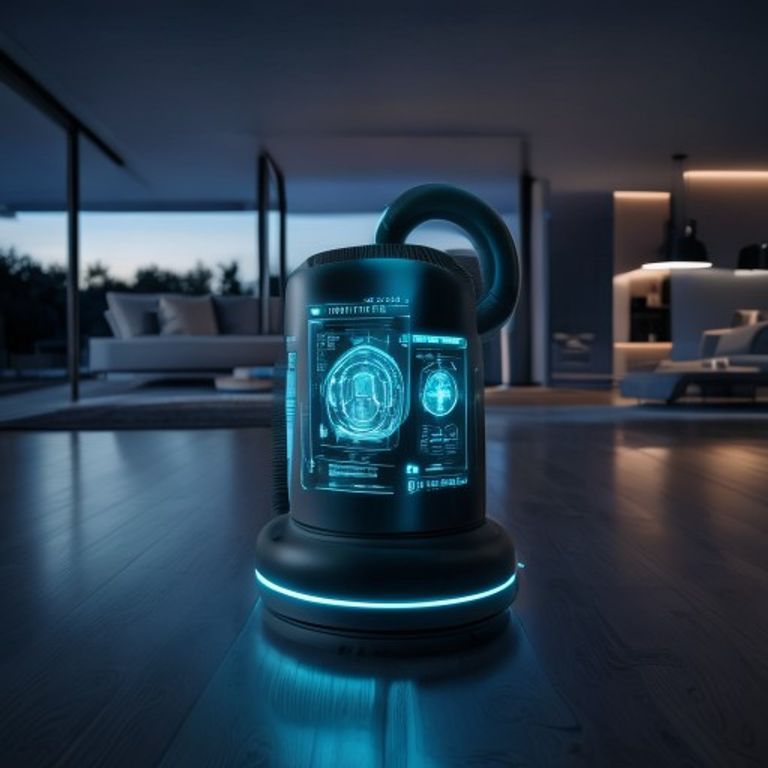

The Invisible Engine: Why Thermodynamics is Meeting its Match in Artificial Intelligence
Imagine a device that knows the exact moment your living room will dip below 68 degrees, long before you feel the chill, and adjusts itself using less power than a standard lightbulb. For decades, heat pumps have been the quiet workhorses of the green energy revolution, praised for their efficiency but often hampered by the static nature of their internal logic. They were mechanical marvels operating on fixed rules. Today, that is changing. The “dumb” metal box sitting outside your home is getting a brain, and that brain is powered by high-level machine learning.
The integration of AI into HVAC (Heating, Ventilation, and Air Conditioning) technology is more than just a minor upgrade; it is a fundamental shift in how we manage the thermodynamics of our living spaces. By marrying the physical capabilities of heat pumps with the predictive power of neural networks, we are entering an era where energy consumption is no longer a guessing game. It is a calculated, automated, and highly optimized process that benefits both the consumer’s wallet and the planet’s health.
Why It Is Trending
The sudden surge in interest regarding AI-driven heat pumps isn’t accidental. It is the result of a “perfect storm” of global energy policy, climate goals, and the democratization of advanced computing. Governments across North America and Europe are offering massive subsidies—like those found in the U.S. Inflation Reduction Act—to incentivize homeowners to ditch gas furnaces for electric alternatives. However, as adoption scales, the strain on the electrical grid becomes a primary concern.
This is where the trend hits its stride. Industry leaders realize that we cannot simply add millions of high-draw appliances to the grid without making them smarter. The conversation has shifted from “How do we make a better compressor?” to “How do we make the compressor respond to real-time grid data?” This intersection of hardware and software is attracting venture capital and tech giants alike, turning a traditionally “boring” utility sector into a hotbed for Silicon Valley-style innovation.
Furthermore, the rise of Predictive Analytics has allowed companies to prove that AI-optimized systems can reduce energy waste by up to 30% compared to standard heat pumps. In a world where energy prices remain volatile, a 30% savings is enough to turn any niche technology into a mainstream trend.
The Intelligence Behind the Heat: Key Details
What does it actually mean for a heat pump to use AI? It isn’t about the unit “talking” to you; it’s about the unit making thousands of micro-adjustments every hour based on variables a human would never notice. Here are the core pillars of this technological evolution:
- Hyper-Local Weather Integration: Standard heat pumps react to the current outdoor temperature. AI-enhanced units, utilizing data streams similar to those processed by Google’s weather models, look at 48-hour forecasts. If a cold snap is coming, the system pre-heats the home during off-peak hours when electricity is cheapest and the air is slightly warmer, storing that thermal energy in the structure itself.
- Predictive Maintenance and Digital Twins: Using technology pioneered by NVIDIA, manufacturers are creating “digital twins” of heat pumps in the cloud. By comparing a real-world unit’s performance against its digital ideal, the AI can detect a failing bearing or a refrigerant leak weeks before a total breakdown occurs. This prevents costly emergency repairs and extends the lifespan of the equipment.
- Dynamic Grid Interaction: Through partnerships with companies like Microsoft and their Azure IoT frameworks, new heat pumps can act as a “virtual power plant.” When the grid is stressed, the AI can subtly throttle the power draw across thousands of homes simultaneously, preventing blackouts without the residents ever noticing a change in comfort.
- Occupancy Pattern Recognition: Using Reinforcement Learning—the same logic used by OpenAI to train complex models—these systems learn the specific thermal “personality” of a house. They learn which rooms lose heat faster and when the occupants are typically away, creating a bespoke heating schedule that evolves as the family’s habits change.
The Role of Big Tech and specialized AI
We are seeing a fascinating cross-pollination between heavy industry and big tech. For instance, Google DeepMind has famously used AI to reduce the energy required to cool its data centers by 40%. Those same algorithmic principles are now being compressed to run on “edge” devices—chips located directly inside the heat pump. This prevents the need for a constant, high-bandwidth internet connection, ensuring the “smart” features work even if the Wi-Fi goes down.
Moreover, the development of Edge Computing is a crucial related topic here. By processing data locally on the device rather than sending it all to a central server, AI heat pumps can protect user privacy while responding to environmental changes in milliseconds. This local intelligence is what allows the system to balance the load between the compressor, the fans, and the expansion valves with surgical precision.
Final Thoughts
The transition to a carbon-neutral world is often framed as a series of sacrifices—driving less, spending more, or living with less comfort. The AI-powered heat pump refutes that narrative entirely. It suggests that through smarter software, we can actually increase our comfort while decreasing our environmental footprint.
As we look toward the next decade, the “secret weapon” for heat pumps won’t be a new type of refrigerant or a more powerful motor; it will be the lines of code that allow these machines to understand their environment. By treating the home as a dynamic ecosystem rather than a static box, AI is turning the humble heat pump into the most important tool in the modern energy arsenal. The revolution is quiet, it is efficient, and it is powered by data.
Frequently Asked Questions
Does an AI heat pump require a constant internet connection?
While an internet connection is used for initial learning and receiving weather updates, many modern systems use “Edge AI” to perform their primary optimizations locally. This ensures the unit remains efficient even if your home network experiences an outage.
Will AI make my heat pump more expensive to purchase?
The initial hardware cost may be slightly higher due to advanced sensors and processing chips. However, the energy savings—often ranging from 15% to 30% annually—typically allow the unit to pay for the “intelligence upgrade” within the first two to three years of operation.
Can AI heat pumps help prevent power outages?
Yes. Through a concept called “Demand Response,” AI-enabled heat pumps can communicate with utility providers. During peak demand, the system can slightly reduce its power consumption in a way that is undetectable to the homeowner, collectively reducing the strain on the electrical grid and preventing rolling blackouts.