
Introduction
The frozen landscapes of Eastern Europe have become a grim laboratory for the next generation of algorithmic warfare. While traditional artillery and trench maneuvers still define the frontline, a silent shift is occurring in the command centers. The latest Russian offensive is no longer just a battle of attrition; it has transformed into a high-stakes test of AI-driven strategy. Military analysts are observing a pivot toward “algorithmic kineticism,” where the speed of data processing now dictates the movement of steel and soldiers on the ground.
This isn’t the sci-fi version of warfare we once imagined. Instead, it is a gritty, pragmatic integration of machine learning into existing weapon systems. From autonomous drone swarms that can navigate without GPS to predictive models that calculate the optimal window for a breakthrough, the battlefield is being remapped by code. As these technologies mature, the window for human decision-making is shrinking, creating a new reality where the side with the superior neural network holds the tactical edge.
Why It Is Trending
The intersection of artificial intelligence and active conflict has captured the attention of global defense experts, tech titans, and geopolitical analysts alike. This topic is trending because we are witnessing the first major conflict where commercial AI tools are being repurposed for high-intensity warfare. When companies like NVIDIA report record-breaking demand for chips, the world looks at data centers, but defense ministries are looking at the frontline.
Furthermore, the discussion is gaining momentum due to the “transparency” of the modern battlefield. With high-resolution satellite imagery and open-source intelligence (OSINT) tools, the effects of AI-optimized strikes are visible in near real-time. This has sparked a global debate on the ethics of autonomous weapons and the potential for an AI arms race that mirrors the nuclear tensions of the 20th century. Major players like Microsoft and Google have faced internal and external pressure regarding how their cloud and AI infrastructures might be utilized in such high-stakes environments.
The Shift to Algorithmic Targeting
The core of the new Russian offensive strategy lies in the compression of the “kill chain.” Traditionally, identifying a target, relaying coordinates, and firing took several minutes. By implementing AI-enhanced computer vision, this process is being reduced to seconds. These systems can filter through thousands of hours of drone footage to identify camouflaged tanks or hidden troop concentrations that would be invisible to the human eye.
This relates closely to the broader field of Computer Vision in Surveillance, where AI models are trained to recognize specific patterns in chaotic environments. While civilian applications involve self-driving cars or medical imaging, in a conflict zone, these same algorithms are being used to automate the selection of targets. The transition from human-in-the-loop to human-on-the-loop systems marks a significant escalation in how technology is applied on the frontlines.
Drone Autonomy and Swarm Intelligence
One of the most significant developments in the latest offensive is the deployment of drones that can operate independently of a pilot’s direct control. Electronic warfare (EW) has traditionally been the most effective countermeasure against drones, jamming the signals between the operator and the aircraft. However, by using onboard AI chips—many of which rely on architectures pioneered by companies like NVIDIA—these drones can now recognize their targets and navigate obstacles autonomously even when their signal is completely cut off.
The use of Autonomous Weapon Systems (AWS) is a polarizing topic, but its utility in bypassing electronic countermeasures is undeniable. These “loitering munitions” can stay in the air, scan for specific heat signatures or shapes, and strike without a single command being sent over the airwaves. This shift has forced a total rethink of defensive maneuvers, as traditional jamming becomes less effective against an “intelligent” machine.
Predictive Logistics: The Secret Weapon
Beyond the frontlines, AI is being used to solve the oldest problem in warfare: logistics. Russia has reportedly begun utilizing predictive analytics to manage the flow of ammunition and fuel. By analyzing historical consumption patterns and real-time sensor data, these models can predict where a unit will run out of supplies before the commander even realizes it. This is a direct application of the same predictive maintenance algorithms used by Amazon or FedEx to keep global supply chains moving.
When combined with the data-crunching power of large-scale cloud environments, these logistics models allow for a more sustained and relentless offensive. It prevents the “logistics tail” from becoming a liability, ensuring that the momentum of an assault isn’t lost due to avoidable shortages. This back-end AI strategy is perhaps less flashy than drone swarms, but it is often more decisive in determining the outcome of a long-term campaign.
Information Warfare and Generative AI
The offensive isn’t just taking place on physical soil; it’s also happening in the digital psyche of the population. The use of generative AI to create “deepfake” content and automated propaganda has reached a new level of sophistication. Using models similar to those developed by OpenAI or Meta, state actors can generate thousands of unique, context-aware social media posts designed to demoralize the opposition or spread misinformation about the success of an offensive.
This form of cognitive warfare is designed to paralyze the decision-making process of the adversary. When the public cannot distinguish between a real video of a retreating general and an AI-generated one, the social fabric begins to fray. This integration of Generative AI in Information Operations has turned social media platforms into the second front of the offensive, where the goal is to win the war of perception before the first shot is even fired.
Key Details of the AI Strategy
- Target Identification: Use of neural networks to distinguish between civilian and military hardware in cluttered urban environments.
- EW Resilience: Implementation of edge-computing on drones to maintain mission objectives despite heavy signal jamming.
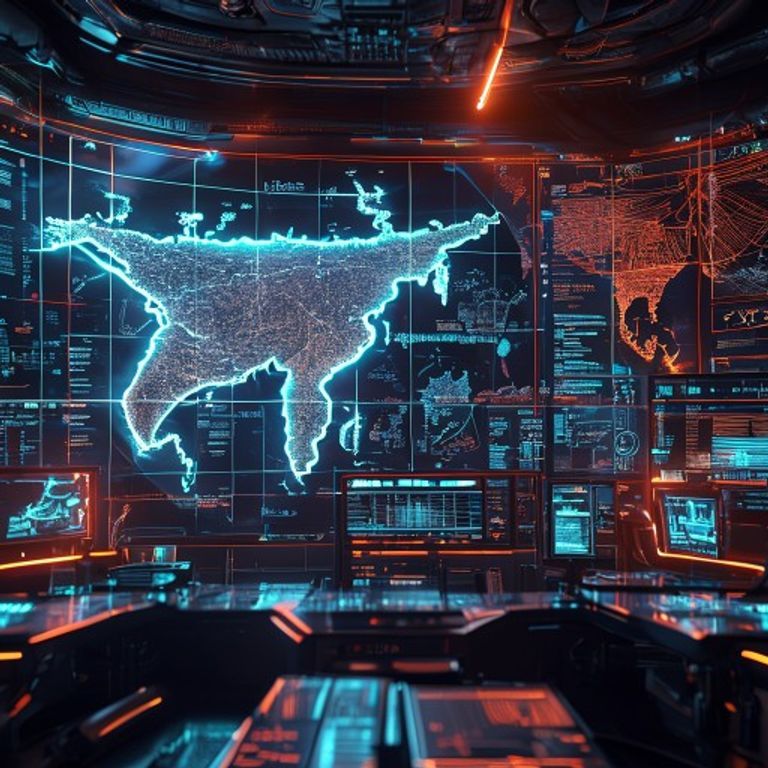
- Data Fusion: Combining satellite imagery, intercepted radio signals, and drone feeds into a single AI-managed operational map.
- Resource Optimization: Algorithmic management of supply chains to ensure frontline units remain combat-effective for longer periods.
- Psychological Operations: Deployment of large language models (LLMs) to automate and scale disinformation campaigns across multiple languages.
Final Thoughts
The latest Russian offensive serves as a stark reminder that the nature of conflict has fundamentally changed. We are no longer in an era where raw numbers alone determine victory. The “smart” offensive relies on the ability to process information faster than the enemy can react. As AI continues to evolve, the line between software development and military strategy will continue to blur.
While the world watches the kinetic movements on the map, the real battle is being fought in the silicon and the code. Organizations like Anthropic and OpenAI continue to advocate for safety and alignment in AI, but the reality of the battlefield shows that when survival is at stake, the ethical guardrails of commercial AI are often the first things to be discarded. The future of global security will depend not just on who has the most powerful weapons, but on who has the most resilient and adaptable algorithms.
Frequently Asked Questions
Is AI actually making decisions on who to kill in the current offensive?
Currently, most systems are “human-on-the-loop,” meaning an AI identifies a potential target, but a human operator gives the final command to strike. However, there are increasing reports of “loitering munitions” using autonomous target recognition in environments where signal jamming prevents human control.
How does NVIDIA or other tech companies fit into this conflict?
While these companies do not directly supply the military for these offensives, their hardware (like GPUs) and open-source software frameworks are the foundations upon which these AI models are built. Commercial technology is often repurposed or acquired through secondary markets to power military AI systems.
What is the biggest risk of AI in this context?
The biggest risk is “flash escalation,” where AI systems on both sides react to each other at speeds exceeding human comprehension, leading to an unintended and rapid intensification of the conflict. Additionally, the lack of accountability in autonomous strikes remains a major international legal and ethical concern.