
Introduction
For decades, the promise of Artificial Intelligence (AI) was relegated to the realms of science fiction and experimental laboratories. However, in the last 24 months, a profound shift has occurred. We have moved past the era of novelty chatbots and digital art generators into a period of deep integration. AI is no longer just a “tech topic”; it has become the invisible architect of the modern global economy.
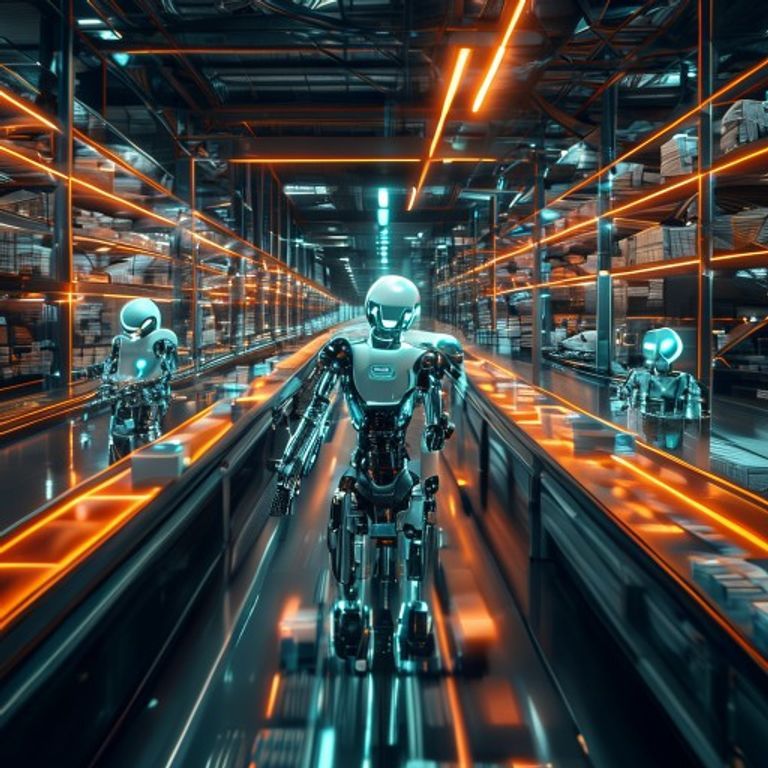
While the headlines often focus on the dramatic—humanoid robots or autonomous vehicles—the real economic revolution is happening in the shadows. It is found in the optimization of global supply chains, the algorithmic precision of high-frequency trading, and the massive reallocation of corporate capital. This isn’t a loud explosion of change; it is a quiet, systematic restructuring of how value is created, distributed, and sustained across borders.
As we look at the current financial landscape, it is clear that AI is acting as a “force multiplier.” It is enhancing productivity in sectors that have remained stagnant for years and forcing a total re-evaluation of labor markets. This article explores how this silent revolution is unfolding and what it means for the future of global wealth.
Why It Is Trending
The topic of AI’s economic impact is currently dominating global discourse for several critical reasons. First, the “hype cycle” has met reality. Financial institutions like Goldman Sachs and the IMF have recently released sobering yet optimistic reports suggesting that AI could drive a 7% (or nearly $7 trillion) increase in global GDP over the next decade. Investors are no longer looking for “AI potential”; they are demanding “AI results.”
Secondly, the geopolitical landscape has shifted. We are witnessing an “AI arms race” that transcends mere military applications. Nations are competing for semiconductor dominance and data sovereignty, recognizing that the country with the most efficient AI infrastructure will likely dictate the terms of 21st-century trade. This has made AI a central pillar of national security and economic policy discussions in Washington, Brussels, and Beijing.
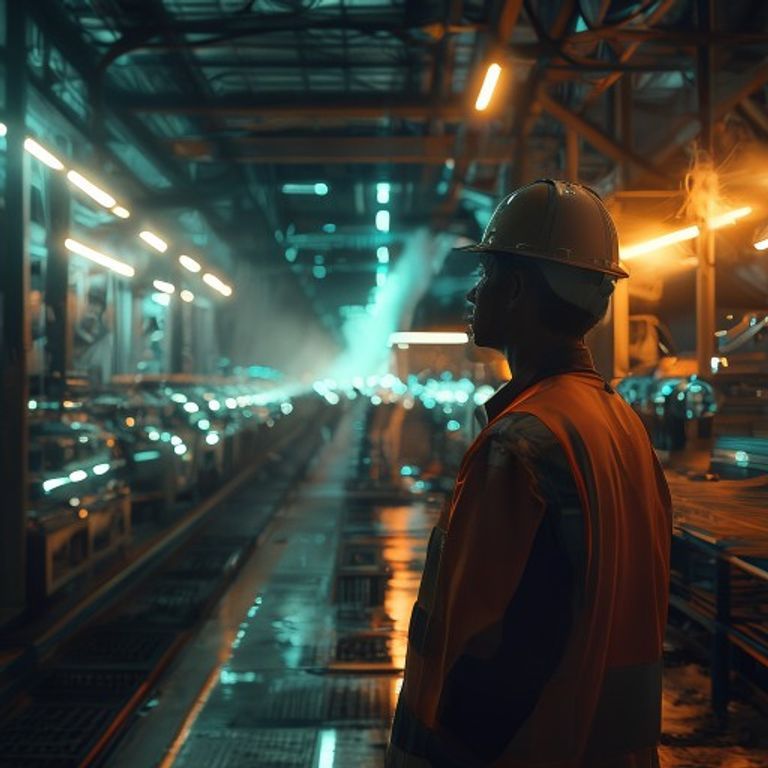
Finally, the labor market is experiencing a “Great Re-skilling.” Unlike previous industrial revolutions that primarily affected manual labor, Generative AI is touching white-collar sectors—legal, finance, and software engineering. The speed at which these industries are adapting is unprecedented, making it a trending concern for professionals, policymakers, and educational institutions worldwide.
Key Details
- The Productivity Paradox Solved: For years, economists were puzzled by low productivity growth despite technological advances. AI is finally moving the needle by automating cognitive tasks, allowing workers to focus on high-value strategy rather than administrative maintenance.
- Supply Chain Hyper-Optimization: Global logistics firms are using predictive AI to anticipate port congestion and consumer demand shifts weeks in advance. This “anticipatory logistics” is reducing waste and lowering the cost of goods globally.
- The Democritization of Specialized Knowledge: AI tools are allowing small-to-medium enterprises (SMEs) to access legal, analytical, and marketing capabilities that were previously only affordable for Fortune 500 companies, leveling the playing field in the global marketplace.
- Labor Market Displacement vs. Augmentation: While job displacement is a valid concern, the data suggests a trend toward “augmentation.” AI is taking over the “drudgery” of jobs, leading to the creation of new roles such as AI auditors, prompt engineers, and algorithmic bias specialists.
- Capital Allocation Shifts: Venture capital and private equity are aggressively pivoting. We are seeing a massive migration of capital away from traditional SaaS (Software as a Service) and toward “AI-native” infrastructure and energy companies capable of powering massive data centers.
- Financial Market Volatility: Algorithmic trading powered by machine learning now accounts for a significant portion of market volume. While this provides liquidity, it also introduces new risks of “flash crashes” and systemic correlations that regulators are struggling to monitor.
The Invisible Infrastructure of Finance
In the banking sector, AI is reshaping the concept of risk. Traditional credit scoring is being replaced by sophisticated machine learning models that can predict a borrower’s reliability using thousands of unconventional data points. This allows for more inclusive lending in developing economies while simultaneously tightening security in fraud detection. The “quiet” nature of this change means that while the consumer experience remains similar, the backend machinery of global finance has been entirely replaced.
Furthermore, AI is driving a massive shift in energy demand. The economic geography of the future is being written by the location of data centers. Countries with stable, green energy grids are becoming the new “oil states” of the digital age. This is creating a new economic map where Northern Europe and parts of North America are seeing a manufacturing renaissance driven by the need for massive, sustainable compute power.
Addressing the Digital Divide
One of the most significant, yet often overlooked, aspects of this economic shift is the widening gap between AI-ready nations and those left behind. The global economy is at risk of a new kind of “data colonialism.” Developed nations with the capital to build LLMs (Large Language Models) and hardware are extracting value from global data, while developing nations may struggle to keep up without the necessary infrastructure.
However, there is a silver lining. AI’s ability to provide high-level education and medical diagnostics via a smartphone is helping to skip traditional infrastructure hurdles in emerging markets. If managed correctly, AI could be the ultimate tool for economic convergence, allowing developing nations to leapfrog into high-tech service economies.
Final Thoughts
The reshaping of the global economy by AI is a double-edged sword of unprecedented proportions. On one hand, we are on the precipice of a productivity boom that could solve some of the world’s most pressing challenges, from climate change modeling to healthcare breakthroughs. On the other hand, the speed of this transition threatens to outpace our social and regulatory frameworks.
We are moving into an era where “economic intelligence” is no longer a human monopoly. The winners of this new era will not necessarily be the ones with the most labor or the most land, but those who can most effectively integrate human creativity with machine efficiency. As AI continues to quietly weave itself into the fabric of our daily lives, the global economy will become faster, more efficient, and undeniably more complex.
Ultimately, the goal for leaders and individuals alike should not be to resist the integration of AI, but to guide it. By focusing on transparency, ethics, and inclusive growth, we can ensure that the AI-driven economy of the future benefits the many, rather than the few. The revolution is here; it is silent, it is digital, and it is irreversible.