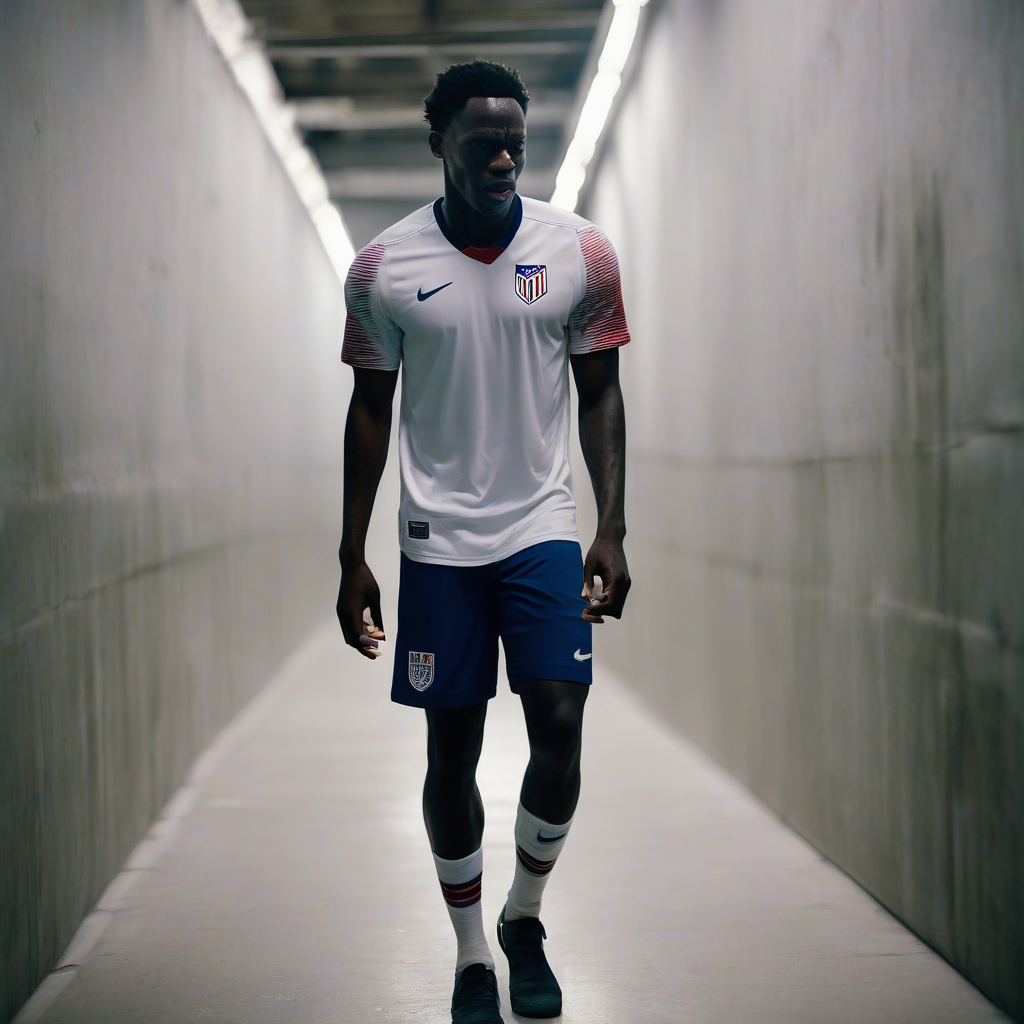

Canada’s Historic Copa América Run: How Stephen Eustáquio Anchored the Path to the Quarter-Finals
When the final whistle blew under the sweltering heat of Orlando, it wasn’t just a scoreless draw recorded in the books; it was a declaration of independence for Canadian soccer. Stephen Eustáquio stood at the center of the pitch, a portrait of calm amidst the chaotic celebrations of his teammates. By securing a 0-0 draw against a veteran Chile side, Canada officially punched its ticket to the 2024 Copa América quarter-finals in its debut appearance, defying the odds and silencing a continent of skeptics.
For years, the narrative surrounding the Canadian Men’s National Team (CANMNT) focused on individual brilliance—the lightning pace of Alphonso Davies or the clinical finishing of Jonathan David. However, this tournament has highlighted a different truth: the team’s heartbeat is found in the midfield. As the tactical engine and vocal leader, the performance of Stephen Eustáquio has been the stabilizing force that allowed Jesse Marsch’s high-pressing system to survive the rigors of CONMEBOL competition.
This achievement marks the first time a CONCACAF debutant has advanced from the group stage since Honduras in 2001. It is a milestone that transcends statistics, signaling Canada’s arrival as a legitimate threat ahead of the 2026 FIFA World Cup. At the heart of it all is a player who embodies the “new Canada”—composed, tactically disciplined, and unafraid of the world’s heavyweights.
The Tactical Masterclass of Stephen Eustáquio Against Chile
The match against Chile was never going to be a beautiful display of “Joga Bonito.” It was a gritty, foul-heavy, and physically exhausting battle. In a game where emotions threatened to boil over, Stephen Eustáquio acted as the team’s emotional and tactical thermostat. While Chile attempted to disrupt Canada’s rhythm with veteran savvy and aggressive challenges, Eustáquio remained the most composed player on the field.
Operating in a double-pivot, Eustáquio was tasked with the dual responsibility of shielding a back four that has been surprisingly resolute and initiating the transition to attack. His ability to find pockets of space under pressure allowed Canada to bypass Chile’s initial press. More importantly, his positioning cut off the passing lanes to Chile’s creative outlets, forcing the South American side into wide areas where they were less effective.
Statistically, the Porto midfielder was everywhere. He led the team in successful passes in the final third and was instrumental in recovering loose balls during the high-intensity scrambles that defined the second half. This wasn’t just about technical skill; it was about professional game management. Eustáquio knew exactly when to slow the tempo down and when to unleash the wingers, showing a level of maturity that Canada has often lacked in previous major tournaments.
Why Stephen Eustáquio is the Heartbeat of Jesse Marsch’s System
When Jesse Marsch took over the head coaching duties just weeks before the tournament, many wondered how the “Red Bull” style of play would translate to a roster used to a different tempo. Marsch demands a “heavy metal” style of soccer—constant pressing, verticality, and immediate reactions to turnovers. To make this work without leaving the defense exposed, you need a midfield general who can read the game three steps ahead. That is exactly what Stephen Eustáquio provides.
Marsch has frequently praised the midfielder’s soccer IQ. In the modern game, the holding midfielder is often the most important coach on the field. Eustáquio’s communication was visible throughout the group stage, constantly directing his teammates’ pressing triggers and ensuring that the gap between the midfield and the defensive line remained tight. Without his tactical discipline, the aggressive press would have been easily picked apart by the technical quality of opponents like Argentina and Peru.
Furthermore, Eustáquio brings a European pedigree that has become infectious within the locker room. Playing at the highest levels with FC Porto in the UEFA Champions League has prepared him for the “dark arts” of international soccer. He doesn’t get rattled by the histrionics of opponents or the pressure of a hostile crowd. This psychological resilience is perhaps his greatest contribution to a young Canadian squad still finding its identity on the global stage.
Breaking Down Stephen Eustáquio’s Impact on Defensive Stability
While the highlights often go to the goalscorers, Canada’s progression was built on the foundation of two consecutive clean sheets. In the matches against Peru and Chile, the defensive organization was elite. This stability starts with Stephen Eustáquio and his partnership with Ismaël Koné. By sitting deeper and screening the center-backs, Eustáquio allowed the fullbacks to push higher, creating the numerical advantages Canada needed to create chances.
His defensive contributions aren’t just about tackles; they are about “interception intuition.” Eustáquio consistently finds himself in the right place at the right time to stop a counter-attack before it even begins. This “unseen work” is why he is the first name on the teamsheet for Marsch. In the quarter-finals, where the margin for error is razor-thin, this defensive awareness will be the difference between a historic semi-final berth and a flight home.
Canada Silences the Critics in Their Copa América Debut
Entering the tournament, many South American pundits dismissed Canada as a “guest” that would struggle to cope with the intensity of CONMEBOL soccer. The opening match against Argentina, despite a 2-0 loss, showed that Canada could hang with the world champions. However, it was the subsequent games that proved they could win. The 1-0 victory over Peru and the 0-0 draw with Chile demonstrated a side of the Canadian character that had been missing: defensive resilience.
The narrative has now shifted from “can they compete?” to “how far can they go?” Canada finished second in Group A with four points, a result that seemed unlikely when the groups were first drawn. This run has captivated a nation back home, with viewing parties erupting from Vancouver to Halifax. The soccer culture in Canada is no longer just about the women’s team or individual stars abroad; it is about a cohesive men’s unit that plays with a chip on its shoulder.
The physical nature of the Chile match was a literal baptism by fire. Canada absorbed 14 fouls and dealt with a red-card situation for Chile early on, but they never lost their focus. This mental toughness is a direct reflection of the leadership group, led by the quiet but firm guidance of players like Eustáquio and Davies. They have transitioned from a team that plays “nice” soccer to a team that is “hard to play against.”
The Road Ahead: Preparing for the Quarter-Final Battle
As the dust settles on the group stage, Canada now looks toward a quarter-final matchup, likely against Venezuela. This represents a massive opportunity. Unlike facing a traditional powerhouse like Brazil or Uruguay, a matchup with Venezuela feels like a winnable battle for a confident Canadian side. However, the stakes are significantly higher, and the pressure of knockout soccer is a different beast entirely.
The coaching staff will be looking to refine the attacking transitions. While the defense has been stellar, Canada has only scored one goal in three matches. To advance further, they will need to find a way to reward the hard work of the midfield. Fans are hoping that the link-up play between Stephen Eustáquio and the forwards becomes more clinical in the final third.
Injury concerns and fatigue will also play a role. The humidity and travel schedule of the Copa América are notorious for wearing down squads. Depth will be tested, but the core of the team remains intact. The “Golden Generation” is no longer a prospect for the future; they are the reality of the present, and they are hungry for more than just a quarter-final appearance.
The Viral Rise of Canadian Soccer Culture
Social media has been ablaze with “Canada Soccer” trending across platforms like X and TikTok. The image of the Canadian flag flying in the knockout rounds of a South American tournament has sparked a wave of national pride. Fans have dubbed the midfield duo of Eustáquio and Koné as the “Engine Room,” with highlight reels of their ball recoveries and passing accuracy circulating among soccer purists.
This trend isn’t just about the current tournament; it’s about the momentum toward 2026. Every successful result in the Copa América builds the commercial and cultural infrastructure for soccer in Canada. Sponsors are taking note, and the domestic league is seeing a surge in interest. The “Eustáquio effect”—a mix of humble leadership and elite performance—has made him a fan favorite and a role model for young Canadian players currently in academies across the country.
The conversation online has moved past the “hockey nation” trope. While hockey remains the cultural bedrock, soccer has claimed its place as the sport of the modern, diverse Canadian identity. This historic run is the perfect advertisement for the sport’s growth, proving that with the right tactical setup and leadership, Canada can stand toe-to-toe with the best in the world.
Frequently Asked Questions
Who will Canada play in the Copa América quarter-finals?
Canada is set to face the winner of Group B, which is likely to be Venezuela, depending on the final group stage results. The match will take place in Arlington, Texas.
How did Stephen Eustáquio contribute to the draw against Chile?
Stephen Eustáquio provided crucial defensive cover, led the team in successful passes, and managed the tempo of the game, ensuring Canada maintained their defensive shape to secure the necessary point to advance.
Is this Canada’s first time in the Copa América?
Yes, 2024 marks Canada’s debut in the tournament. Their qualification for the quarter-finals is a historic achievement, making them one of the few debutant teams to ever advance past the group stage.
What was the score of the Canada vs. Chile match?
The match ended in a 0-0 draw. Despite Chile going down to 10 men in the first half after a red card for Gabriel Suazo, Canada focused on defensive solidity to ensure they secured the draw needed to finish second in Group A.