
The Hidden Ways AI is Reshaping Your Daily Life: The Invisible Revolution
Introduction
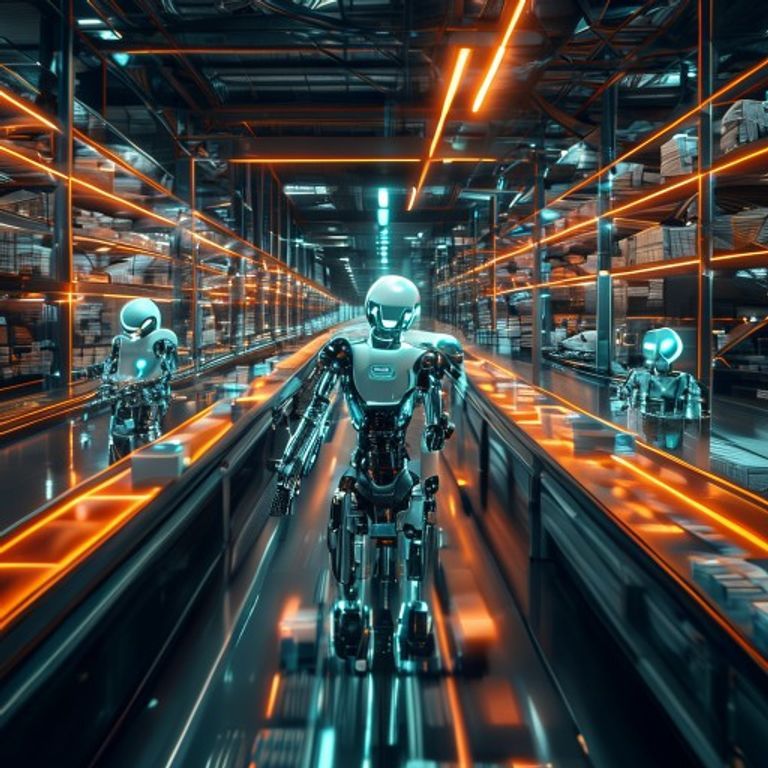
For decades, the mention of Artificial Intelligence (AI) conjured images of gleaming silver robots and sentient supercomputers straight out of science fiction. However, as we move further into the mid-2020s, the reality of AI has proven to be much more subtle, yet significantly more profound. It isn’t a singular “being” that has arrived; rather, it is a sophisticated layer of intelligence that has woven itself into the fabric of our existence.
Today, AI operates largely behind the scenes. It is the invisible architect of our digital experiences, the silent guardian of our financial transactions, and the quiet assistant optimizing our morning commutes. While much of the public discourse focuses on generative tools like chatbots, the “hidden” ways AI influences our daily routines are perhaps the most impactful. From the food we order to the way our homes manage energy, the algorithmic touch is everywhere.
This article explores the quiet integration of machine learning and predictive analytics into the mundane aspects of life. We are no longer living in a world where we “use” AI; we are living in a world that is “powered” by it. Understanding these hidden mechanisms is essential for any modern consumer, professional, or tech enthusiast looking to navigate the complexities of the current digital landscape.
Why It Is Trending
The topic of AI integration is currently dominating global headlines and social media trends for several critical reasons. First, we have reached a “saturation point” where AI technology has moved from experimental laboratories into consumer-grade hardware. With the advent of specialized AI chips in smartphones and appliances, the speed of processing has allowed for real-time applications that were previously impossible.
Second, there is an increasing societal awareness regarding data privacy and algorithmic bias. As people realize how much of their decision-making is influenced by recommendation engines, a “tech-literacy” movement has gained momentum. People want to know why they see certain advertisements, why their insurance premiums are changing, and how their smart devices are “learning” their habits.
Furthermore, the economic shift toward automation has made AI a household conversation. It is no longer just about Silicon Valley; it is about the local grocery store using AI for inventory management and the family doctor using AI for diagnostic assistance. This “normalization” of high-tech tools in low-tech environments is exactly why the “hidden AI” narrative is trending—it’s finally hitting home for the average person.
Key Details
To truly appreciate how deeply embedded these systems are, we must look at the specific sectors where AI has become the primary driver of efficiency and personalization. Here are the most significant hidden ways AI is reshaping your life right now:
1. Hyper-Personalized Consumption
In the past, marketing was broad and demographic-based. Today, AI utilizes “deep learning” to analyze thousands of data points—from your scrolling speed on social media to the time of day you browse—to create a unique digital storefront for every individual. This isn’t just about suggesting a similar book; it’s about predicting your needs before you’ve even articulated them. This predictive retail model is drastically reducing the “search time” in our lives but also raising questions about consumer autonomy.
2. The Evolution of Urban Mobility
While fully autonomous cars are still a work in progress, AI is already managing the infrastructure they drive on. Smart traffic lights now use computer vision to adjust signals in real-time based on traffic density, reducing idling time and carbon emissions. Navigation apps no longer just show the shortest route; they use historical and real-time data to predict traffic patterns an hour into the future, subtly rerouting thousands of drivers to prevent gridlock from ever occurring.
3. Predictive Healthcare and Wellness
The wearable on your wrist is doing much more than counting steps. Modern health AI analyzes heart rate variability, sleep stages, and even blood oxygen levels to detect anomalies that might indicate illness days before symptoms appear. On the provider side, AI tools are now used to scan radiological images with a level of precision that assists doctors in identifying early-stage issues that the human eye might miss. This shift from reactive to proactive medicine is perhaps the most life-saving “hidden” benefit of the AI era.
4. The Invisible Hand in Finance
Every time you swipe a credit card, an AI model evaluates that transaction against billions of others in milliseconds. This isn’t just for fraud detection; AI now manages personal credit scores, determines loan eligibility through alternative data points, and powers “robo-advisors” that manage millions of retirement accounts. The financial world is now almost entirely algorithmic, aiming for a frictionless economy where transactions are instantaneous and secure.
5. Smart Home Energy Management
The “smart home” has evolved beyond voice-controlled lights. Modern AI-driven thermostats and appliances learn the thermal profile of your house and the specific habits of its occupants. They shift energy-intensive tasks to off-peak hours when electricity is cheaper and more sustainable. This invisible optimization is reducing household costs and helping municipalities manage the load on the power grid without the user ever having to flip a switch.
- Algorithmic Curation: Your newsfeed and entertainment are filtered by AI to match your psychological profile.
- Natural Language Processing (NLP): Email filters and customer service bots have become so advanced they often pass for human interaction in routine tasks.
- Biometric Security: Facial recognition and fingerprint sensing are AI-driven processes that replace traditional passwords with mathematical representations of your identity.
- Supply Chain Optimization: AI predicts shortages of household goods, ensuring that the products you need are on the shelf when you visit the store.
Final Thoughts
The hidden integration of AI into our daily lives represents one of the most significant technological shifts in human history. We are entering an era of “Ambient Intelligence,” where the environment around us responds to our presence and needs without requiring explicit commands. While this offers unprecedented convenience and efficiency, it also demands a new level of vigilance regarding our digital footprints and the transparency of the systems we rely on.
As we move forward, the goal should not be to resist this integration but to understand it. By recognizing the hidden ways AI operates, we can make more informed choices about the products we use and the data we share. The invisible revolution is here to stay, and its ultimate success will be measured by how much it enhances the human experience without overshadowing it. Professional and personal success in this new age will belong to those who can effectively partner with these silent algorithms to create a more streamlined, healthy, and connected life.