
Introduction
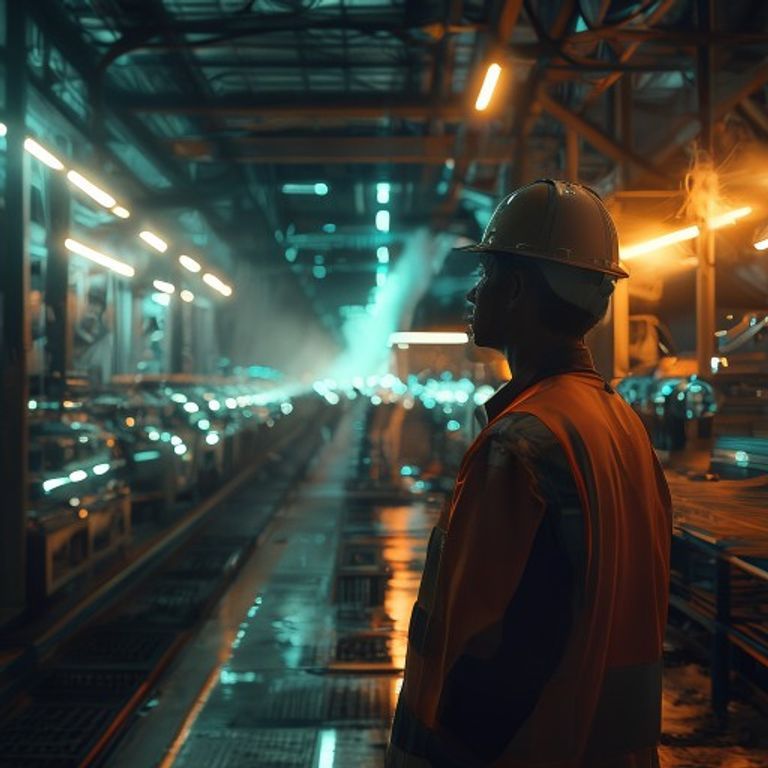
Imagine walking into a million-square-foot fulfillment center where the lights are dimmed, the heating is turned off, and the rhythmic thud of human footsteps has been replaced by the whirring of hydraulic actuators. This isn’t a scene from a dystopian sci-fi film; it is the blueprint for the near-future of global logistics. While we have spent the last decade worrying about algorithms taking over white-collar writing jobs, a silent revolution has been brewing on the concrete floors of Amazon’s shipping hubs. The company recently began testing “Digit,” a bipedal robot that walks, grasps, and moves with an eerie, human-like fluidity. For the hundreds of thousands of workers who rely on these warehouses for their livelihoods, the arrival of these metallic coworkers signals a shift that feels less like a partnership and more like a countdown.
The stakes couldn’t be higher. We are no longer talking about simple conveyor belts or stationary robotic arms. We are witnessing the birth of a mobile, AI-driven workforce that doesn’t need lunch breaks, healthcare, or sleep. As Amazon integrates these advanced systems, the central question shifts from “How can AI help us?” to “What happens when AI doesn’t need us at all?” This transition is sparking a heated debate across the tech industry and labor unions alike, as the line between human labor and mechanical efficiency continues to blur into non-existence.
Why It Is Trending
This topic has dominated tech headlines recently because it represents the first major “physical” manifestation of the AI boom. While OpenAI’s ChatGPT and Google’s Gemini have transformed how we process information, Amazon’s robotics push shows how AI is finally gaining a physical body capable of navigating the real world. The trend is fueled by a perfect storm of labor shortages, rising wages, and a massive breakthrough in “embodied AI”—the technology that allows robots to understand spatial environments just as well as humans do.
Furthermore, investors are closely watching how companies like NVIDIA are providing the “brains” for these machines. With NVIDIA’s Isaac platform providing the simulation environments needed to train these robots, the speed of deployment has accelerated exponentially. This isn’t just an Amazon story; it’s a story about the entire global supply chain reaching a tipping point where human muscle is becoming more expensive and less reliable than silicon and steel. People are searching for answers because the impact is tangible—it’s about the packages on our doorsteps and the jobs in our communities.
The Rise of the Humanoid Worker
Amazon’s latest mechanical addition, Digit, developed in partnership with Agility Robotics, is a masterclass in modern engineering. Unlike previous robots that moved on tracks or wheels, Digit is designed to navigate spaces built for humans. It can climb stairs, crouch, and handle plastic totes in ways that were previously thought to be exclusively human tasks. This shift is part of a broader industry trend where companies are moving away from “fixed automation” toward “flexible AI.”
We are also seeing a massive influx of capital into this sector. While we recently covered how generative AI is reshaping the creative industry, the physical labor sector is seeing a similar disruption. Microsoft and OpenAI have already begun investing in humanoid robotics startups like Figure AI, signaling that the masters of software are now hungry for a piece of the physical world. This cross-pollination of industries is why the current trend feels so unstoppable; it’s the union of advanced neural networks and high-performance hardware.
However, Amazon maintains that these robots are meant to “augment” the workforce, taking over repetitive and strenuous tasks to reduce injury. Skeptics, however, point to the history of automation: when a machine can do a job for pennies an hour, the human worker is rarely “re-skilled”—they are usually replaced. The tension here is a micro-reflection of the macro-trends we see in emerging tech shifts where efficiency almost always wins over human tradition.
Key Details
- The Sequoia System: Amazon’s new integrated robotics system that can identify and store inventory 75% faster than previous methods, drastically reducing order processing times.
- Bipedal Mobility: Digit’s ability to walk on two legs allows it to operate in existing warehouse layouts without the need for expensive structural renovations.
- Safety and Injury Claims: Amazon asserts that robotics will lead to a 15% reduction in recordable incidents, though critics argue the increased pace of work for remaining humans may offset these gains.
- NVIDIA Integration: The use of NVIDIA’s Omniverse to create “digital twins” of warehouses, allowing AI models to practice millions of movements in a virtual world before ever stepping onto a real floor.
- Economic Impact: Experts predict that full-scale robot integration could save Amazon billions in annual labor costs, potentially putting pressure on competitors like Walmart and Target to follow suit.
- The “Human-in-the-Loop” Model: Currently, humans are still required to troubleshoot and oversee these systems, but the ratio of humans to robots is shrinking every year.
The Socio-Economic Ripple Effect
Beyond the warehouse walls, the shift toward an AI workforce has profound implications for the middle class. Warehouse jobs have long served as a safety net for those without specialized degrees. If these roles disappear, we face a massive displacement crisis. It isn’t just about Amazon; it’s about the precedent they set for the entire retail and logistics sector. If the world’s largest retailer can operate with a skeleton crew of humans, every other company will be forced to do the same to remain price-competitive.
We also have to consider the psychological impact on the remaining workforce. Working alongside a machine that never tires creates a “silent pressure” to keep up. This has been a recurring theme in recent tech critiques—the idea that humans are being forced to behave more like machines just to stay employed. As we look at the progress being made by Anthropic and Meta in making AI more “human-like” in its reasoning, the gap between what a person can do and what a machine can do is closing with terrifying speed.
Final Thoughts
The introduction of AI-driven humanoid robots into Amazon’s warehouses is more than just a corporate upgrade; it is the beginning of a new epoch in labor history. While the promise of increased safety and faster shipping is enticing for the consumer, the social cost remains an uncalculated variable. We are entering an era where “employment” may look fundamentally different, moving away from physical labor and toward the management of automated systems.
Whether this leads to a future of “universal basic income” or a widening wealth gap depends entirely on how governments and corporations choose to handle the transition. One thing is certain: the era of the human-centric warehouse is ending. As these robots become more sophisticated, cheaper, and more reliable, the “Help Wanted” signs of the future may very well be written in code rather than ink.
Frequently Asked Questions
Will robots completely replace human workers at Amazon?
While Amazon claims robots will work alongside humans to improve safety, the increasing capability of bipedal robots like Digit suggests that many manual sorting and moving roles will eventually be fully automated, significantly reducing the human headcount per warehouse.
How does AI help these robots walk and move?
These robots use a combination of LIDAR, computer vision, and neural networks trained in simulated environments. Technologies like NVIDIA’s Isaac platform allow them to “learn” how to balance and interact with objects through millions of virtual trials before they are deployed in real-world settings.
Is this trend happening outside of Amazon?
Yes. Companies like Tesla (with the Optimus bot), Figure AI, and Boston Dynamics are all racing to create general-purpose humanoid robots for logistics, manufacturing, and even home care, signaling a global shift toward automated physical labor.